
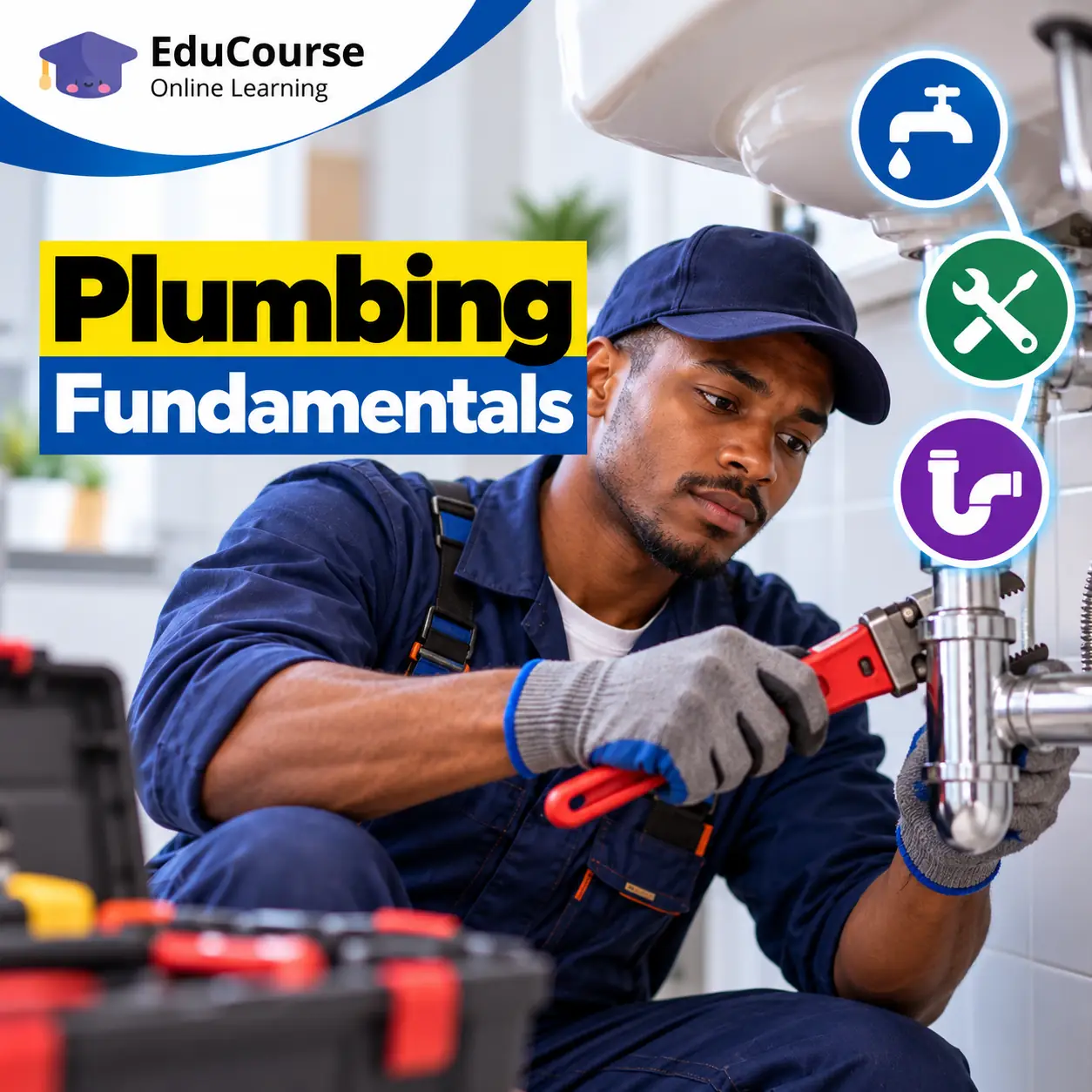
Study a Free Plumbing Fundamentals Course with Certificate in South Africa with Durban City Academy. Learn how water supply, drainage and ventilation work together,.
10 lessons with topics and quizzes.
The Free Plumbing Fundamentals Course with Certificate in South Africa is an online introduction to domestic plumbing for beginners who want to understand how water supply, drainage and everyday plumbing systems work. You will study common pipes, fittings, tools, fixtures, maintenance and safe work practices, with a certificate available after completion.
It is suited to South African learners exploring construction and trades, people building practical workplace knowledge, and anyone who wants to better understand plumbing at home. Lessons cover the movement of water through a building, basic fault finding, planning simple tasks and recognising when work should be referred to a qualified professional.
Plumbing combines several systems that must work together. This beginner course gives you a clear starting point: how water reaches a tap, how wastewater leaves a fixture and why details such as a trap or isolation valve matter.
Online learning makes it possible to study plumbing fundamentals alongside other commitments. The examples focus on homes and small buildings, making the material relevant to everyday settings across South Africa.
Understanding the basics can help you communicate more clearly about a plumbing problem, prepare for entry-level construction work or decide which skills to explore next. It does not replace supervised practical training or specialist assessment.
Lessons introduce water meters, stopcocks and isolation valves, as well as common pressure problems. For a practical example, see our guide to locating and using a household water shut-off.
You will also explore drainage routes, waste pipes, soil pipes, traps and ventilation. These concepts help explain why a fixture can drain poorly even when its water supply appears normal. Our overview of how a home plumbing system works provides useful context.
Other learning areas include pipe materials, fittings, measuring, joint preparation, taps, sinks, toilets and geyser fundamentals. The focus is on recognising components and understanding their purpose—not treating every plumbing task as suitable for a beginner.
As you work through the lessons, you will practise a simple way to think through common scenarios: observe the issue, identify the system involved, consider safe next steps and communicate what you found. A good handover can be just as useful as knowing the name of a fitting.
After completing the course, you can continue learning through the supporting guides below or explore other construction and trades topics. The course certificate recognises course completion; it should not be taken as proof of trade qualification or permission to carry out specialist work.
Plumbing knowledge is useful wherever buildings need reliable water supply and drainage. For learners interested in construction, maintenance or property-related work, understanding the basic systems can make it easier to follow instructions, recognise components and discuss a task with a supervisor or tradesperson.
Small problems can also become confusing when you do not know how the system is arranged. Learning the difference between a supply line and a drain, or knowing what an isolation valve does, gives you a more organised starting point when describing an issue or deciding what to check safely.
This plumbing fundamentals course in South Africa is designed to build understanding before learners take on more advanced study or supervised practical experience. It supports awareness and confidence, while making clear that complex or potentially hazardous work needs the right expertise.
See how supply, drainage and ventilation work together, and understand the limits of beginner-level work.
Follow water from a connection to household outlets and identify the purpose of meters, tanks and isolation controls.
Explore how wastewater moves away from fixtures, why traps hold a water seal and how gradients and ventilation support drainage.
Recognise common domestic pipe materials and learn why size, material and connection type should be considered together.
Review basic hand tools and a careful sequence for measuring, marking, cutting and preparing pipe ends.
Learn about common tap, basin, sink and toilet connections, along with simple checks for leaks.
Identify basic system components and understand the role of temperature and pressure controls.
Use visible clues and an orderly approach to investigate common plumbing concerns and routine maintenance needs.
Interpret familiar symbols, trace supply and drainage routes, and think through materials, access and task sequence.
Practise structured problem-solving, protect the surrounding area and communicate findings and next steps clearly.
10 lessons with topics and quizzes covered in this course.
Plumbing Fundamentals is designed for beginners who want a clear introduction to the subject, with practical lessons, guided learning, and simple explanations that are easy to follow online.
Yes, learners in South Africa can study this course online at their own pace, which makes it useful for flexible learning, personal development, and building practical knowledge from home or work.
This course covers practical learning areas such as How water supply, drainage and ventilation work together, Common plumbing systems in homes and small buildings, Work boundaries, safe practice and when to call a qualified professional, Water supply routes from the connection to household outlets, helping learners build foundational knowledge that can be applied in study, work tasks, and everyday digital learning.
Most learners can work through the course in a few focused hours, but the online format allows you to move at your own pace and revisit lessons whenever you need extra practice.
A certificate is available after successful completion, which gives learners a simple way to show that they finished the course content and assessment requirements online.
These skills are useful because they support workplace readiness, digital confidence, and practical day-to-day tasks, which can help learners strengthen their knowledge in a South African learning and work environment.