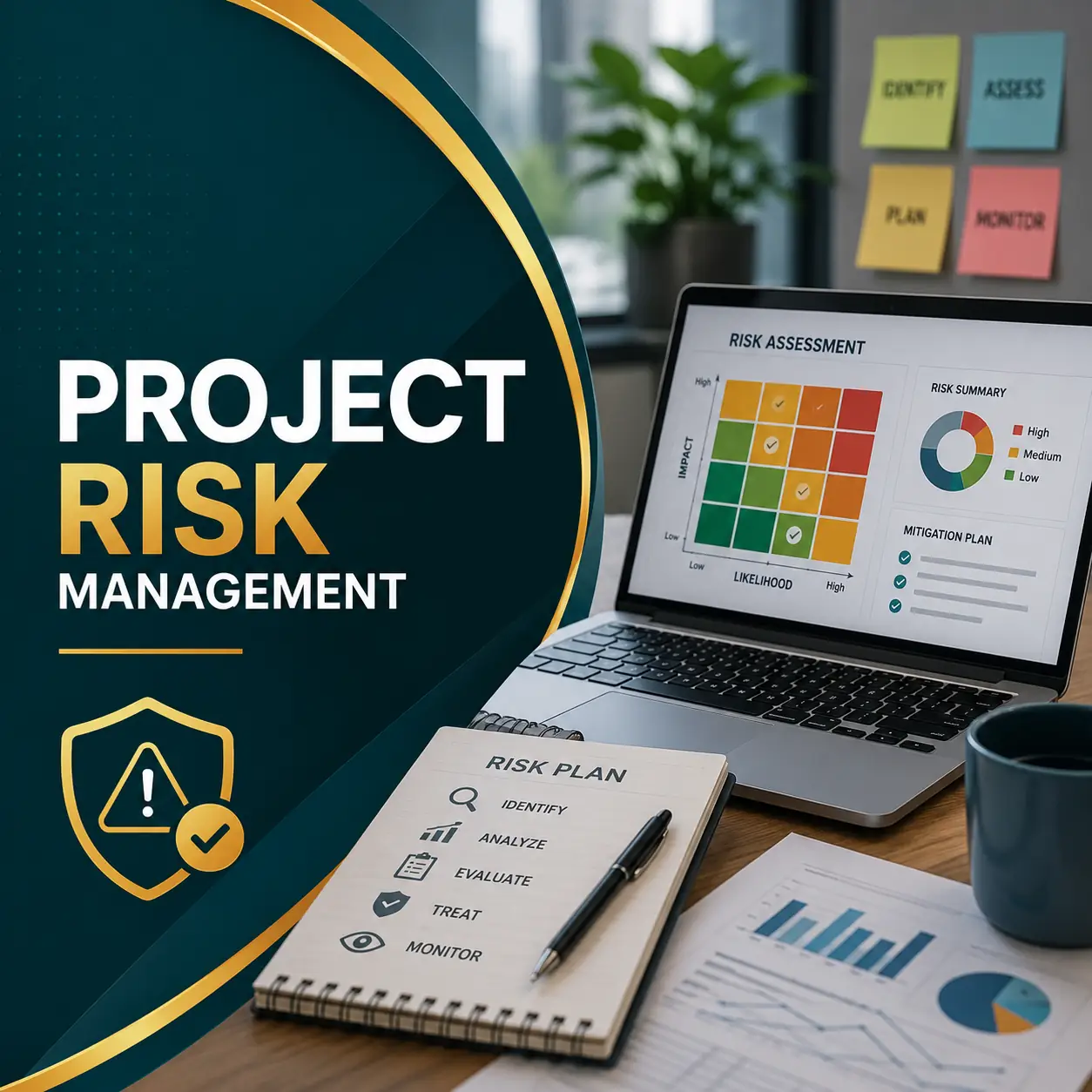
Study a Free Project Risk Management Course with Certificate in South Africa with Durban City Academy. Learn understanding what project risk means, importance of.
10 lessons with topics and quizzes.
If you're looking for a practical way to strengthen your skills in managing project uncertainties, the Free Project Risk Management Course with Certificate in South Africa from Durban City Academy is a perfect fit. This online training is tailored specifically for South African learners who want to master the essentials of risk management in projects. Whether you're entering project management or aiming to enhance your workplace capabilities, this course provides solid, hands-on knowledge. After completing the course, you'll receive a certificate to validate your new skills.
This course suits professionals, students, and anyone involved in projects that need effective risk oversight. You'll explore techniques to identify, analyse, and respond to risks, all delivered through engaging online lessons. The course covers both foundational concepts and practical tools, making it an excellent starting point for building confidence in handling project uncertainties.
Beginning with a clear understanding of what project risk means, this beginner-friendly course breaks down complex ideas into accessible content. You'll learn to distinguish between different types of risks, from internal challenges to external influences, all within a South African context. For new learners, this structure offers a smooth introduction to project risk management basics.
Given the growing demand for project skills in South Africa's diverse industries, knowing how to manage risks effectively can improve project success and reduce costly delays. Online learning allows you to study at your own pace, on your own schedule, which fits well for busy professionals or students across South Africa. This flexibility, combined with the practical focus of the course, equips you to apply what you learn directly to your work or studies.
South African projects often face unique risks including regulatory factors, logistical challenges, and local environmental concerns. This course addresses those special considerations, helping you understand how generic risk methods adapt to local realities. Through case examples relevant to South Africa, you'll gain a deeper appreciation of what managing risks entails in your environment.
Core lessons cover essential skills such as brainstorming risk identification, using checklists, qualitative and quantitative analysis, and developing appropriate response strategies. You'll also dive into hands-on tools like risk registers and software tracking. By investigating roles and responsibilities, the course prepares you for teamwork in risk management within your organisation.
Key learning areas include:
By the course’s end, you will have developed practical skills valuable for typical South African projects, from construction to business initiatives. You can complement your learning with helpful resources like our how to perform a project risk assessment guide or the detailed risk register explanation.
This course awards a certificate upon completion, adding formal proof to your new competencies. It also serves as a foundation for further advancing your project management knowledge with related courses in risk assessment, construction project management, and foundational project management skills. Ready to take control of project risks? Open the course and start learning today.
Project risk management is a crucial skill in South Africa’s competitive business landscape. Projects that ignore risk tend to face delays, budget overruns, or failure to meet objectives. By learning how to anticipate and handle risks, you enhance your ability to deliver projects successfully.
This course provides valuable knowledge for anyone aiming to support or lead project initiatives. Risk management skills are highly relevant across sectors such as mining, construction, IT, and business services—all vital to South Africa’s economy.
Moreover, mastering risk management tools and techniques opens doors for career growth and better teamwork opportunities. You will add practical value to your organisation or projects while gaining confidence in managing uncertainty.
Learn the basics of risk management and why it matters in projects.
Understand different risk categories and how to identify them.
Explore methods like brainstorming, interviews, and checklist usage for spotting risks.
Assess risk probability and impact without complex calculations.
Delve into numerical methods for evaluating risks using data and models.
Choose and design responses including avoidance, mitigation, transfer, and acceptance.
Implement ongoing risk tracking through audits, updates, and reviews.
Identify who owns risks and how to engage stakeholders effectively.
Utilise templates, registers, and software to streamline risk handling.
Adapt risk practices to local project challenges and regulatory environments.
10 lessons with topics and quizzes covered in this course.
Project Risk Management is designed for beginners who want a clear introduction to the subject, with practical lessons, guided learning, and simple explanations that are easy to follow online.
Yes, learners in South Africa can study this course online at their own pace, which makes it useful for flexible learning, personal development, and building practical knowledge from home or work.
This course covers practical learning areas such as Understanding what project risk means, Importance of risk management in projects, Key terms and concepts in project risk management, Identifying internal vs external risks, helping learners build foundational knowledge that can be applied in study, work tasks, and everyday digital learning.
Most learners can work through the course in a few focused hours, but the online format allows you to move at your own pace and revisit lessons whenever you need extra practice.
A certificate is available after successful completion, which gives learners a simple way to show that they finished the course content and assessment requirements online.
These skills are useful because they support workplace readiness, digital confidence, and practical day-to-day tasks, which can help learners strengthen their knowledge in a South African learning and work environment.