
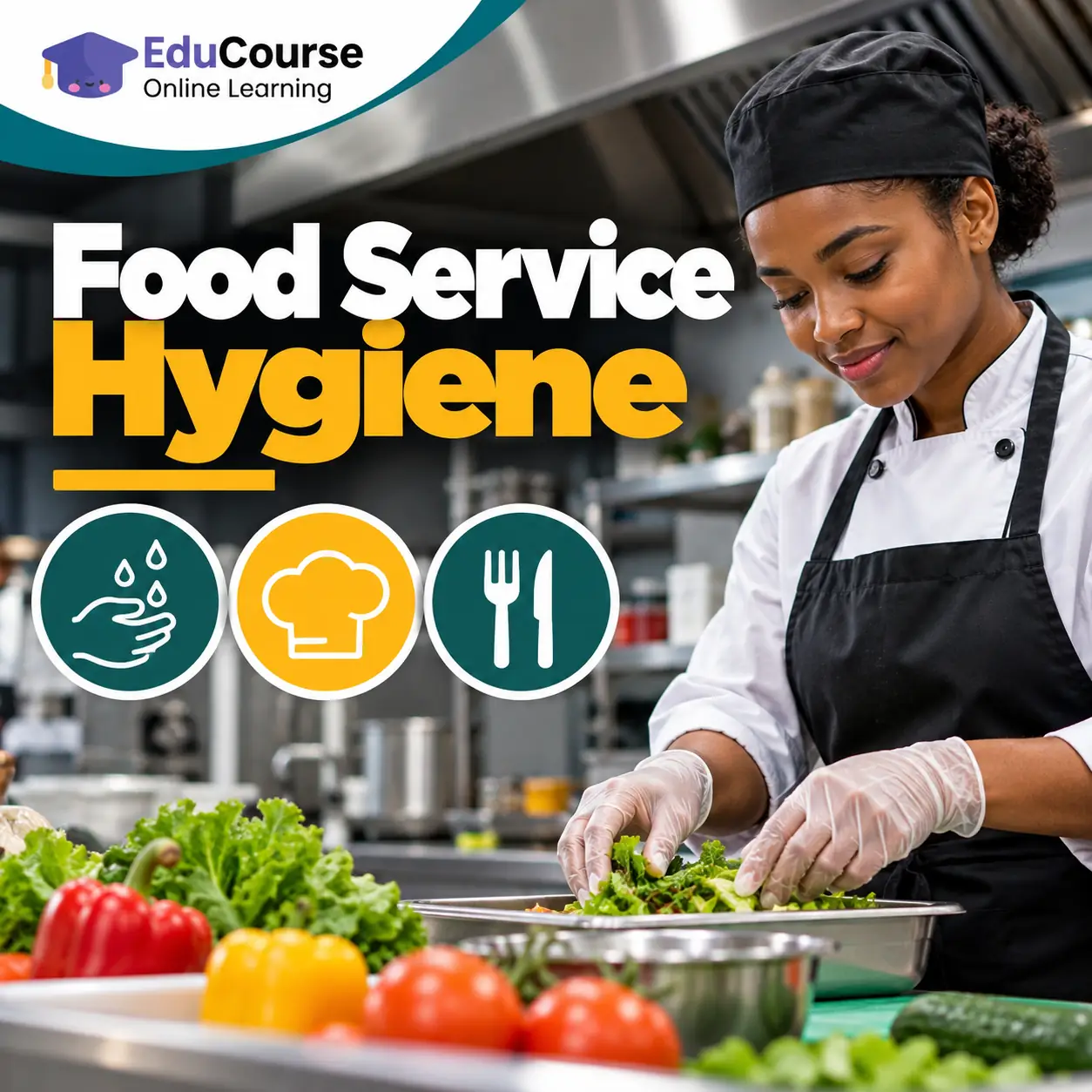
Study a Free Food Service Hygiene Course with Certificate in South Africa with Durban City Academy. Learn understanding Food Service Hygiene and Its Importance,.
10 lessons with topics and quizzes.
If you're looking for a Free Food Service Hygiene Course with Certificate in South Africa, you’ve found the right place. This online course offers practical training on how to maintain food safety and hygiene standards in any food service environment. It’s designed for learners wanting to build essential skills in food hygiene and receive a certificate upon completion—all available at no cost. Study at your own pace through accessible modules focused on real-world applications in South Africa’s food industry.
This beginner-friendly course is tailored for food handlers, kitchen staff, hospitality workers, and anyone eager to improve workplace hygiene knowledge. You will explore key topics such as personal hygiene, preventing food contamination, cleaning protocols, pest control, and safe food storage. Delivered fully online, it suits busy individuals who want effective, free food service hygiene training in South Africa with a recognised certificate.
Food hygiene is critical for preventing foodborne illnesses and ensuring customer safety. For beginners, understanding the basics of cross-contamination, proper cooking temperatures, and waste disposal is invaluable. This course lays a strong foundation for anyone new to food service hygiene, making it an ideal stepping stone towards safer food handling practices in your workplace or business.
South African food service establishments must follow specific hygiene standards to protect consumers and meet legal requirements. By completing this free online course, learners gain insight into these important local regulations, improving workplace compliance. The flexible online format means you can learn food service hygiene fundamentals anywhere, anytime—perfect for learners nationwide looking for convenient training options.
Practical skills are emphasised throughout the course, helping you apply cleaning and sanitizing methods, implement pest control strategies, and manage food waste properly. The course also covers how to safely prepare and store food, ensuring hygiene protocols are followed consistently. This hands-on approach equips you with skills that are highly relevant to South African kitchens, restaurants, and catering environments.
Durban City Academy’s well-structured modules break down each topic clearly. Among key lessons you’ll find: Personal Hygiene for Food Handlers, Food Contamination, Cleaning and Sanitizing, Pest Control, Safe Food Receiving and Storage, and many more. Each lesson is designed to enhance your understanding step-by-step, making complex hygiene concepts easy to grasp for beginners.
Here’s a brief look at some course lessons:
Apart from lessons, you will also engage with real-life scenarios and checklists to reinforce best practices. The course helps build confidence to maintain a hygienic food service environment and supports career growth in hospitality and food safety roles.
Applying hygiene principles daily prevents costly food safety issues and helps businesses comply with regulations like the Foodstuffs, Cosmetics and Disinfectants Act. This training is a practical investment for anyone managing or working in food preparation, serving, or distribution.
Beyond job prospects, maintaining good food hygiene is a shared responsibility. This course raises awareness about common hazards, correct handling methods, and the importance of regular cleaning—all fundamental for safe food service practices in South Africa.
Understand the importance of hygiene and basic safety principles in food service environments.
Learn correct handwashing techniques, health reporting, and dress codes to minimise contamination.
Identify contamination sources and how to prevent cross-contamination during handling and preparation.
Master the difference between cleaning and sanitizing and effective procedures for kitchen hygiene.
Explore preventative measures and responses to pest risks affecting food safety.
Apply inspection, FIFO rotation, and storage best practices to maintain food quality.
Follow protocols that ensure safe food prep and cooking temperatures to prevent illness.
Maintain cleanliness and proper handling of tools and equipment.
Implement correct waste disposal and reduction techniques for a safer workplace.
Apply learned principles in daily work settings with monitoring and response strategies.
10 lessons with topics and quizzes covered in this course.
Online courses like this one provide convenient, cost-free access to fundamental training for learners throughout South Africa. Whether you're in Johannesburg, Cape Town, Durban, or smaller towns, you can gain valuable food service hygiene skills without needing to attend in person. This digital format helps close gaps in training access and supports ongoing professional development in the food and hospitality sectors.
Combining flexibility with recognised certification, Durban City Academy’s free online food service hygiene course supports your goal to learn practical skills at your own schedule and pace.
<divUpon successful completion of all modules and assessments, you will receive a certificate recognising your achievement. This certificate is downloadable online and can be used to demonstrate your food service hygiene knowledge to employers or for self-improvement purposes. There are no fees involved, making it accessible to learners across South Africa seeking free food service hygiene certificate courses.
Food Service Hygiene is designed for beginners who want a clear introduction to the subject, with practical lessons, guided learning, and simple explanations that are easy to follow online.
Yes, learners in South Africa can study this course online at their own pace, which makes it useful for flexible learning, personal development, and building practical knowledge from home or work.
This course covers practical learning areas such as Understanding Food Service Hygiene and Its Importance, Overview of Foodborne Illness and Risks, Legal Requirements for Food Hygiene in South Africa, Proper Handwashing Techniques and When to Wash, helping learners build foundational knowledge that can be applied in study, work tasks, and everyday digital learning.
Most learners can work through the course in a few focused hours, but the online format allows you to move at your own pace and revisit lessons whenever you need extra practice.
A certificate is available after successful completion, which gives learners a simple way to show that they finished the course content and assessment requirements online.
These skills are useful because they support workplace readiness, digital confidence, and practical day-to-day tasks, which can help learners strengthen their knowledge in a South African learning and work environment.